
Sudden, burning joint pain in the middle of the night — especially in the big toe, knees, or ankles — could be gout, and the culprit is almost always high uric acid. This condition is increasingly common in Ahmedabad due to changing diets, high protein intake, and dehydration in hot weather.
A simple uric acid blood test in Ahmedabad can tell you exactly where you stand — and prevent a small problem from becoming a chronic, painful condition.
What Is Uric Acid?
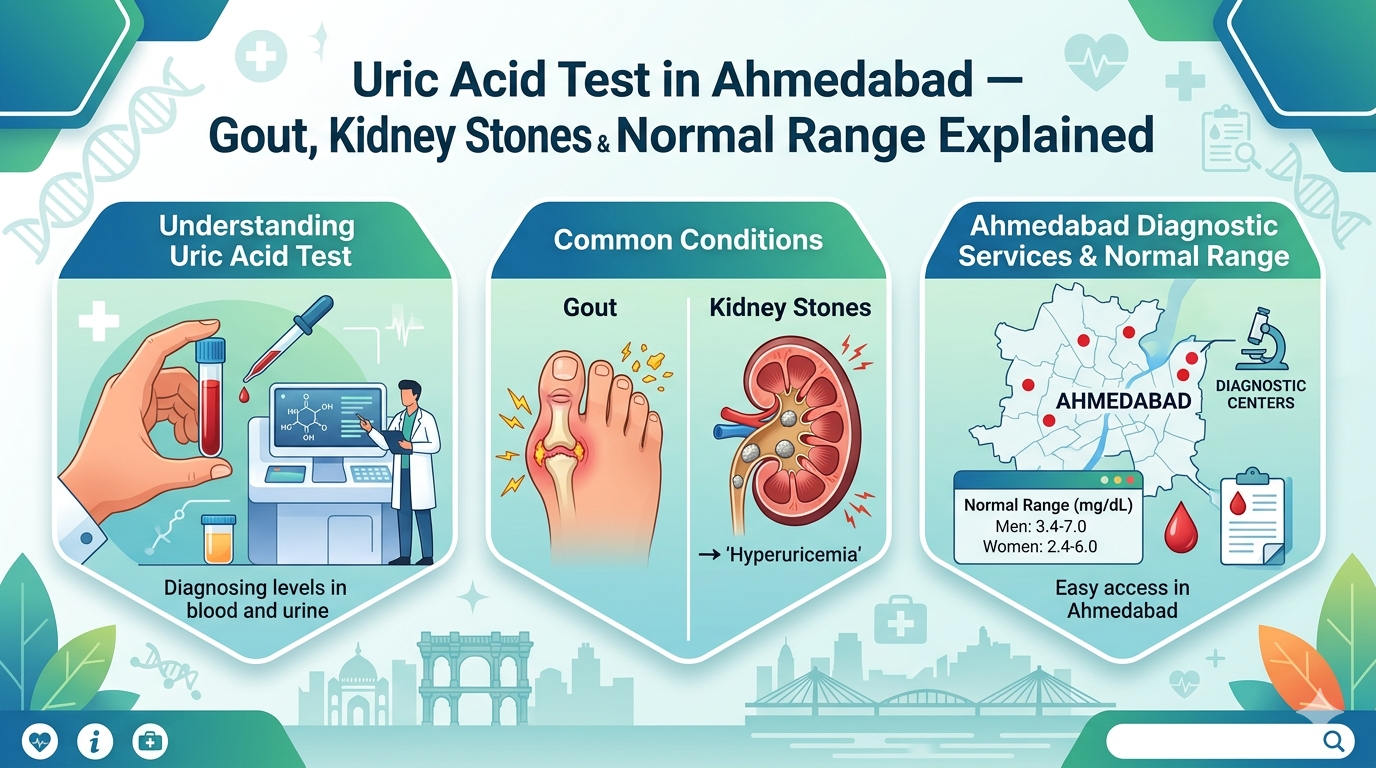
Uric acid is a waste product formed when your body breaks down purines — substances found naturally in your body and in many foods (especially red meat, organ meats, alcohol, and seafood). When your body produces too much uric acid — or your kidneys excrete too little — it builds up and forms sharp, needle-like crystals in joints and tissues.
Normal Uric Acid Levels
Levels above 7.0 mg/dL in men and 6.0 mg/dL in women indicate hyperuricemia (high uric acid).
What Happens When Uric Acid Is Too High?
1. Gout
Uric acid crystals deposit in joints — most commonly the big toe. Gout attacks cause sudden, intense pain, swelling, redness, and warmth. Without treatment, attacks become more frequent and joints can get permanently damaged.
2. Kidney Stones
Excess uric acid can form stones in the kidneys, causing severe back/side pain, blood in urine, and painful urination.
3. Kidney Damage
Chronically high uric acid strains kidney filtering function over time.
4. Tophi
Deposits of uric acid crystals under the skin — visible as hard lumps near joints.
Who Should Get a Uric Acid Test?
Anyone with sudden joint pain, swelling, or redness in toes, knees, or ankles
People with a family history of gout
Those with kidney stones or kidney disease
Diabetics and hypertension patients (often have elevated uric acid)
People consuming high-purine diets (red meat, alcohol, beer)
As part of routine checkups for men above 35
Diet & Lifestyle to Control Uric Acid
Lifestyle tip: Maintain healthy weight, exercise regularly, and stay well-hydrated — especially important in Ahmedabad's hot climate.
Related Tests You Should Know About
Since high uric acid is closely linked to kidney health, also get your kidney function test in Ahmedabad done alongside your uric acid panel.
If you're managing diabetes, pair your tests with an HbA1c diabetes monitoring test — insulin resistance is directly linked to elevated uric acid.
Conclusion
Joint pain is not just age — it could be high uric acid quietly damaging your joints and kidneys. The earlier you test, the easier it is to control. Diet, hydration, and medication can bring uric acid down effectively when caught in time.
Shanti Pathology Laboratory is the best blood test lab in Ahmedabad for accurate, NABL-standard uric acid tests with fast turnaround and affordable rates. Trust Shanti Pathology Laboratory for all your diagnostic needs — visit any of our 4 centers in Naranpura, Paldi, Maninagar, or Gandhinagar.