
Your kidneys filter approximately 200 litres of blood every single day — removing waste, balancing fluids, and regulating blood pressure. Yet kidney disease is often called the "silent killer" because it shows almost no symptoms until more than 60% of kidney function is already lost.
In a city like Ahmedabad, where rising rates of diabetes, hypertension, and unhealthy lifestyle habits are directly linked to kidney damage, a Kidney Function Test (KFT) is not just a medical test — it is a life-saving decision. This guide covers everything you need to know: what KFT is, when to get it, how to prepare, what the results mean, and where to find the most trusted blood test lab in Ahmedabad.
What Is a Kidney Function Test (KFT)?
A Kidney Function Test (KFT) — also known as a Renal Function Test (RFT) — is a group of blood and urine tests that evaluate how efficiently your kidneys are working. It measures waste products, electrolytes, and proteins in your blood to identify early signs of kidney damage or disease.
A complete KFT panel includes the following parameters:
When Should You Get a Kidney Function Test in Ahmedabad?
Many people in Ahmedabad only think about kidney health when a problem becomes serious. That is often too late. Here are the key situations when a KFT is essential:
1. You Have Diabetes or High Blood Pressure
Diabetes and hypertension are the two leading causes of chronic kidney disease (CKD) in India. If you have either condition, getting a kidney function test in Ahmedabad every 6 months is strongly recommended — even if you feel completely fine.
2. You Experience These Warning Symptoms
Swelling in the feet, ankles, or around the eyes
Frequent or reduced urination
Foamy or blood-tinged urine
Persistent fatigue or weakness
Loss of appetite or nausea
Difficulty concentrating or brain fog
Muscle cramps, especially at night
3. You Take Long-Term Medications
Certain medicines — including NSAIDs (like ibuprofen), antibiotics, antifungals, and blood pressure drugs — can damage the kidneys with prolonged use. If you are on any long-term medication, a periodic KFT is essential.
4. You Have a Family History of Kidney Disease
Kidney conditions such as polycystic kidney disease (PKD) and focal segmental glomerulosclerosis (FSGS) have a strong genetic component. If your parents or siblings have been diagnosed with kidney disease, you should get tested regularly at a reliable pathology lab near you.
5. You Have Frequent Kidney Stones or UTIs
Recurrent kidney stones or urinary tract infections can progressively damage kidney tissue. A KFT helps monitor how much your kidney function has been affected.
6. You Are Above 40 Years of Age
After the age of 40, kidney function naturally begins to decline. Annual KFT testing as part of a preventive health checkup is a smart investment in your long-term health.
How to Prepare for a Kidney Function Test
Preparing correctly for a KFT ensures accurate results. Follow these simple steps:
Fast for 8 to 12 hours before the test (water is allowed and encouraged)
Avoid heavy protein meals — red meat, eggs, or protein supplements — for 24 hours before the test
Avoid intense exercise for at least 24 hours before the test — physical exertion can temporarily raise creatinine levels
Stay well-hydrated — drink enough water the night before and the morning of your test
Inform the lab technician about any medications or supplements you are taking
If a urine test is also required, collect the first-morning urine sample as instruct
Step-by-Step Process: How Is a KFT Done?
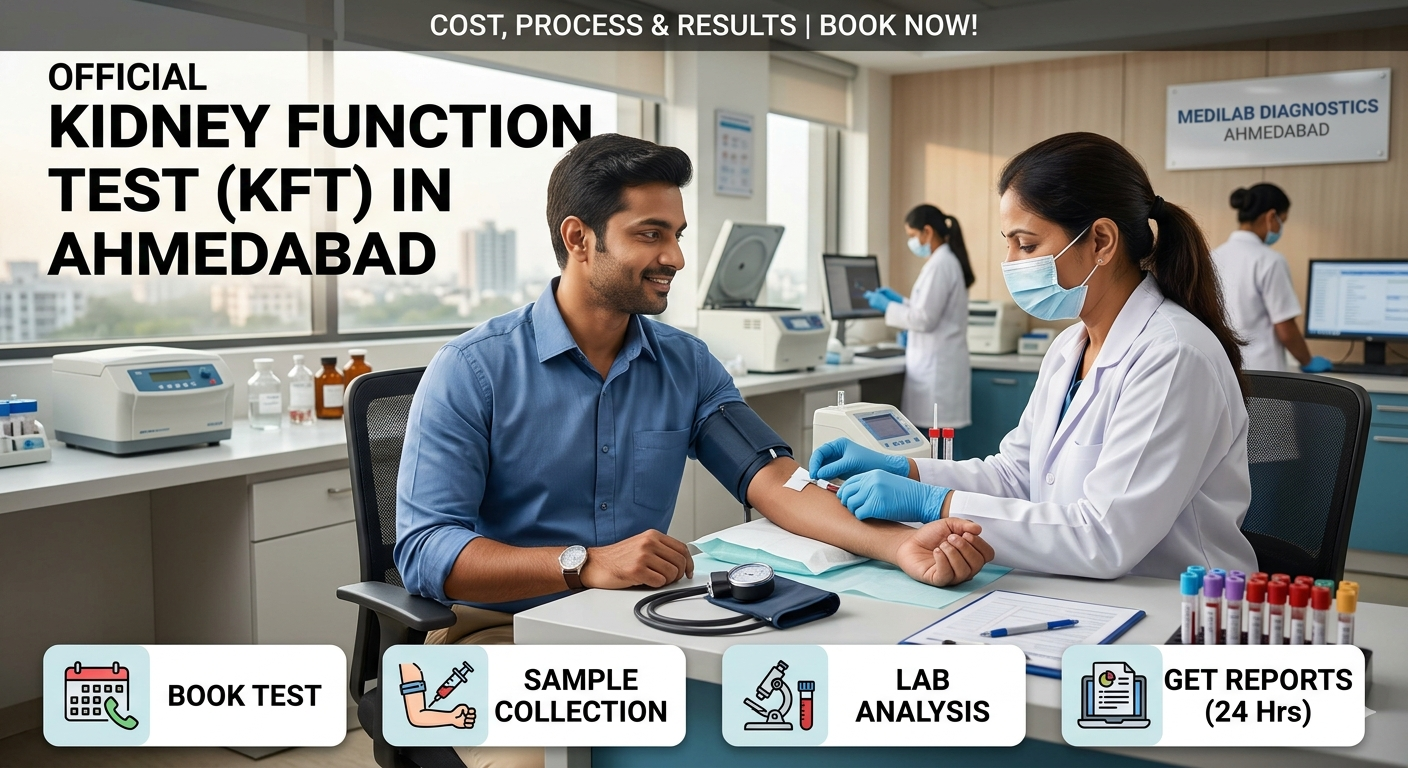
Step 1 — Book Your Test
Visit any Shanti Pathology Laboratory centre in Ahmedabad or book a home sample collection online or by phone. No prior appointment is necessary for walk-ins.
Step 2 — Sample Collection
A trained phlebotomist draws a small blood sample from your arm vein. The process takes less than 5 minutes and is virtually painless. If a urine test is included, you will be given a sterile collection container.
Step 3 — Laboratory Analysis
Your blood sample is processed using fully automated, internationally calibrated analyzers — ensuring precise and reproducible results every time.
Step 4 — Report Delivery
Your KFT report is typically ready on the same day. Reports are delivered digitally via WhatsApp or email, and a printed copy is available for collection.
Understanding Your KFT Results — What Do the Numbers Mean?
High Creatinine
Creatinine is a waste product your kidneys filter out. Elevated creatinine is one of the clearest signs that kidney function is declining. It can indicate acute kidney injury, chronic kidney disease, or dehydration.
High Blood Urea Nitrogen (BUN)
BUN measures the amount of nitrogen in your blood from urea — a waste product of protein metabolism. A high BUN level combined with high creatinine strongly suggests impaired kidney function.
Low eGFR
The estimated Glomerular Filtration Rate (eGFR) is the most important single indicator of overall kidney health. An eGFR below 60 for more than 3 months indicates chronic kidney disease. Below 15 suggests kidney failure.
High Uric Acid
Elevated uric acid can lead to gout and also contributes to kidney stone formation and chronic kidney damage over time.
Abnormal Electrolytes (Sodium, Potassium, Chloride)
Electrolyte imbalances caused by poor kidney function can affect your heart rhythm, muscle function, and fluid balance — all of which require immediate medical attention.
⚠️ Important: Abnormal KFT results should always be evaluated by a qualified nephrologist or physician. Do not self-diagnose based on your report.
Kidney Function Test Cost in Ahmedabad
The cost of a KFT in Ahmedabad varies across labs depending on infrastructure, technology, and the number of parameters included. At Shanti Pathology Laboratory — one of the most trusted pathology labs in Ahmedabad — KFT is available at highly competitive and transparent prices.
For the most accurate and up-to-date pricing, contact Shanti Pathology Laboratory directly or check the available health packages that often bundle KFT with other essential tests at a discounted rate.
👉 View affordable health packages that include KFT — bundled with CBC, LFT, and more at discounted rates.
Why Is Kidney Disease So Common in Ahmedabad?
Ahmedabad's population is increasingly at risk due to a combination of lifestyle and environmental factors:
High prevalence of Type 2 Diabetes — one of the top causes of CKD
Uncontrolled hypertension — directly damages kidney blood vessels
High salt and processed food consumption — puts excess strain on the kidneys
Inadequate water intake — especially in Ahmedabad's hot climate
Self-medication with painkillers — NSAIDs are a leading cause of drug-induced kidney damage
Increasing obesity rates — linked to both diabetes and CKD
These factors make it critically important for Ahmedabad residents to get regular kidney function tests as part of a preventive health strategy.
Shanti Pathology Laboratory — Trusted Blood Test Lab in Ahmedabad for KFT
When it comes to kidney health, accuracy and speed matter. Shanti Pathology Laboratory is one of the best pathology labs in Ahmedabad, trusted by thousands of patients for reliable and affordable diagnostic testing.
Why Ahmedabad Patients Choose Shanti Pathology Laboratory
✅ Fully Automated Technology — Internationally calibrated analyzers for precise results
✅ Experienced Pathologists — Expert interpretation of every report
✅ Same-Day Reports — KFT results available within hours of sample collection
✅ Home Sample Collection — Available across Ahmedabad — no need to visit the lab
✅ Transparent Pricing — No hidden charges, affordable for every budget
✅ 4 Convenient Locations — Across Ahmedabad and Gandhinagar
Shanti Pathology Laboratory Centres — Ahmedabad
📍 Naranpura — Torrent Power, Swaminarayan Avenue, B/113, 132 Feet Ring Rd, near AEC Cross Road
📍 Paldi — Sukhshanti Complex, Paldi
📍 Maninagar — Rajratan Complex, Maninagar
📍 Gandhinagar — Surbhi Complex, Sector 6
📞 98795 08835 🌐 shantipathologylab.com
Searching for a pathology lab near me in Ahmedabad? With 4 centres across the city and home collection available, Shanti Pathology Laboratory is always close to you.
How to Keep Your Kidneys Healthy — Expert Tips
Drink 8 to 10 glasses of water every day — especially important in Ahmedabad's warm climate
Control blood sugar levels if you are diabetic — HbA1c should remain below 7%
Manage blood pressure — keep it below 130/80 mmHg
Avoid self-medicating with painkillers — always consult a doctor first
Reduce salt and processed food intake
Exercise regularly — at least 30 minutes of moderate activity five days a week
Quit smoking — it significantly reduces blood flow to the kidneys
Get annual health checkups — including KFT, CBC, and blood pressure monitoring
Frequently Asked Questions (FAQs)
Q: What is the difference between KFT and RFT?
A: KFT (Kidney Function Test) and RFT (Renal Function Test) are the same test — just referred to by different names. Both evaluate the same panel of kidney health markers.
Q: Can a KFT detect early-stage kidney disease?
A: Yes. Parameters like eGFR and microalbuminuria can detect kidney dysfunction at very early stages — often before any symptoms appear. This is why regular testing is so important.
Q: Is fasting required for a kidney function test?
A: Yes, fasting for 8 to 12 hours is generally recommended for the most accurate results — especially for uric acid and BUN levels.
Q: Can I get a KFT done at home in Ahmedabad?
A: Yes! Shanti Pathology Laboratory offers convenient home blood sample collection across Ahmedabad. Book your slot today and get tested without leaving home.
Q: Should KFT and LFT be done together?
A: Absolutely. Many doctors recommend testing both together as part of a comprehensive health panel. Read our guide on Liver Function Test in Ahmedabad to understand why both tests matter.
Q: How often should I get a kidney function test?
A: Healthy adults should get a KFT once a year. People with diabetes, hypertension, or a history of kidney issues should get tested every 3 to 6 months as advised by their doctor.
Conclusion
Your kidneys work tirelessly behind the scenes — and they deserve the same attention you give to your heart or blood sugar levels. A Kidney Function Test is a simple, quick, and affordable way to catch kidney problems early — before they become serious and irreversible.
If you are in Ahmedabad and looking for the best pathology lab with accurate results, same-day reports, and affordable pricing, Shanti Pathology Laboratory is your most trusted choice. Four convenient centre locations, home collection service, and experienced pathologists — all working to protect your health.
📞 98795 08835 | shantipathologylab.com | Book Home Collection Today