
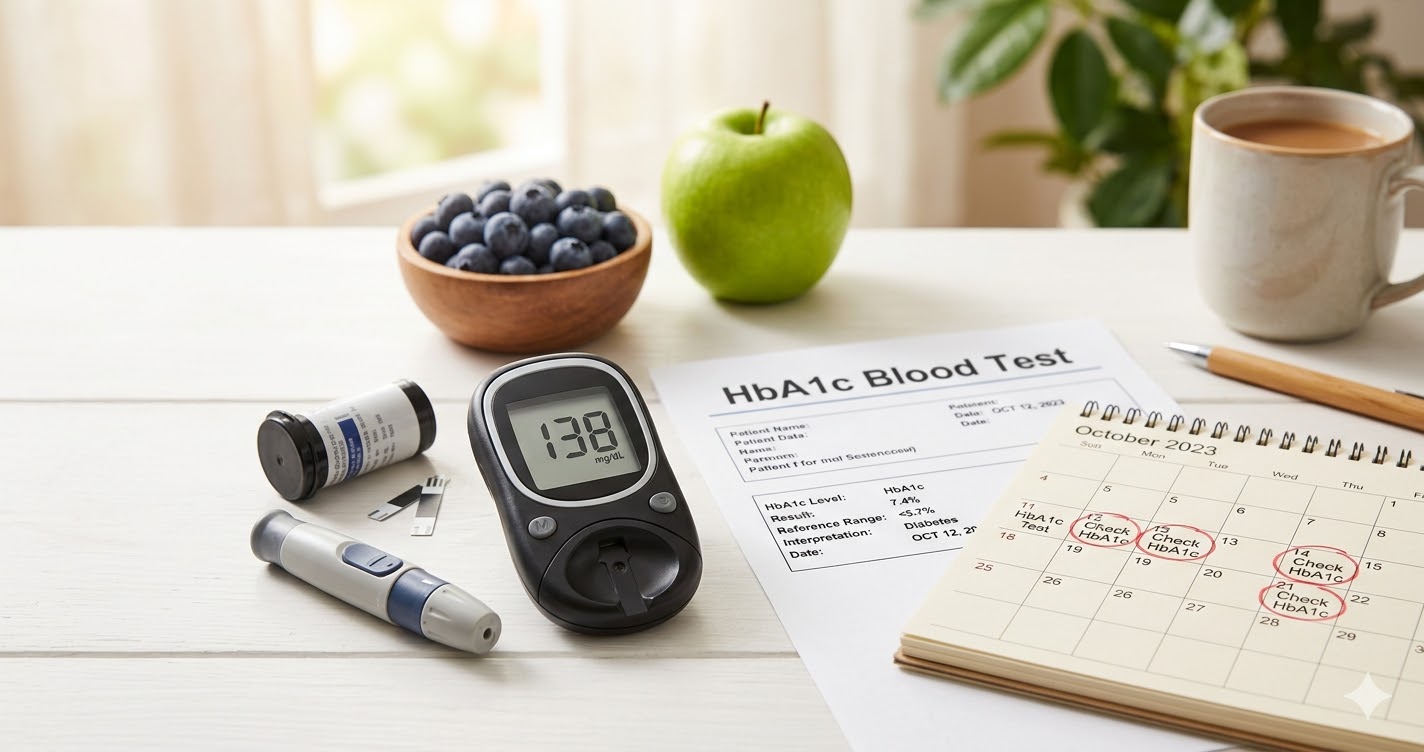
India is often called the diabetes capital of the world, and Gujarat, including Ahmedabad, has one of the highest rates of diabetes in the country. Millions of people are living with Type 2 diabetes, and millions more are in the pre-diabetic stage without even knowing it.
If you or a loved one has been diagnosed with diabetes, regular monitoring is not optional — it is essential. And the single most important test for any diabetic patient is the HbA1c test. In this blog, we explain what HbA1c is, why it matters, what your results mean, and how often you should get tested.
What Is the HbA1c Test?
HbA1c stands for Glycated Haemoglobin. It measures the percentage of haemoglobin (a protein in red blood cells) that has glucose attached to it. Since red blood cells live for about 90 days, the HbA1c test gives an average picture of your blood sugar levels over the past 2 to 3 months — unlike the Fasting Blood Sugar (FBS) test, which only shows your glucose level at one specific moment.
Think of it this way: FBS is like a snapshot, while HbA1c is like a 3-month video of your blood sugar behaviour.
HbA1c Normal Range — What Do the Numbers Mean?
Below 5.7%: Normal — no diabetes or pre-diabetes
5.7% to 6.4%: Pre-diabetes — your blood sugar is higher than normal but not yet in the diabetic range. This is the time to act.
6.5% and above: Diabetes — confirmed diagnosis if this result is repeated on a separate day
Target for diagnosed diabetics: Below 7.0% — this indicates good diabetes management and reduced risk of complications
It is important to note that your doctor may set a personalised target based on your age, other health conditions, and treatment plan. Always discuss your results with your physician.
Why Every 3 Months — Not Once a Year?
Many diabetic patients make the mistake of getting their HbA1c tested only once a year, alongside their annual health checkup. This is not enough. Here is why quarterly testing matters:
Medication Adjustment: If your HbA1c is rising, your doctor needs to know quickly to adjust your medication or insulin dosage before complications develop.
Diet & Lifestyle Feedback: A 3-month test tells you whether your recent dietary changes and exercise habits are actually working — or whether you need to make further adjustments.
Early Detection of Complications: Consistently high HbA1c is linked to kidney damage, nerve damage, eye problems, and heart disease. Quarterly monitoring helps catch deterioration early.
Motivation & Accountability: Seeing your numbers improve every 3 months keeps you motivated to stick to your treatment plan.
HbA1c vs Fasting Blood Sugar — Which Is Better?
Both tests serve different purposes and are not interchangeable. Here is a quick comparison:
Fasting Blood Sugar (FBS): Shows glucose level right now, after fasting. Useful for daily monitoring. Can be affected by a single meal, stress, or illness.
HbA1c: Shows average glucose over 3 months. Not affected by a single bad day. More reliable for assessing long-term diabetes control.
Most doctors recommend doing both tests together for a complete picture of your blood sugar health.
Other Important Tests for Diabetic Patients
If you have diabetes, your regular monitoring should not stop at HbA1c. Diabetes affects multiple organs over time, so a comprehensive approach to testing is essential:
Kidney Function Test (KFT): Diabetes is the leading cause of chronic kidney disease. Annual KFT monitoring is essential.
Lipid Profile: Diabetics are at much higher risk of heart disease. Annual cholesterol monitoring is a must.
Urine Microalbumin: Detects early kidney damage before symptoms appear — crucial for diabetics.
Eye Examination & Vitamin B12: Metformin (a common diabetes medication) depletes Vitamin B12 over time. Annual B12 testing is recommended for patients on long-term Metformin.
You can check our complete range of diabetes-related diagnostic services to find all the tests you need under one roof.
Tips to Lower Your HbA1c Naturally
While medication plays a key role, lifestyle changes can significantly improve your HbA1c levels:
Cut down on refined carbohydrates — white rice, maida, sugary drinks, and processed snacks
Add 30 minutes of brisk walking or light exercise to your daily routine
Eat smaller, more frequent meals to prevent blood sugar spikes
Stay well-hydrated and prioritise 7 to 8 hours of quality sleep
Manage stress through yoga, meditation, or breathing exercises — stress hormones directly raise blood sugar
Get Your HbA1c Test at the Best Pathology Lab in Ahmedabad
Shanti Pathology Laboratory is a trusted name for diabetes monitoring across Ahmedabad and Gandhinagar. When it comes to finding the best pathology lab in Ahmedabad for accurate and affordable HbA1c testing, we offer quick turnaround times, precise results, and the convenience of home sample collection — so your 3-month testing routine never gets interrupted.
Visit any of our four branches:
Naranpura Branch — 132 Feet Ring Rd, near AEC Cross Road, Ahmedabad 380013
Paldi Branch — Sukhshanti Complex, Paldi, Ahmedabad 380007
Maninagar Branch — Rajratan Complex, Maninagar, Ahmedabad 380008
Gandhinagar Branch — Surbhi Complex, Sector 6, Gandhinagar 382006
We also offer free home sample collection across all service areas — call us to schedule your visit at a time convenient for you.
Conclusion
Diabetes is a lifelong condition, but with the right monitoring and care, it is entirely manageable. The HbA1c test every 3 months is your most powerful tool to stay ahead of complications and keep your blood sugar under control. Do not wait — book your test today at Shanti Pathology Laboratory. Call us at +91 98795 08835 or visit shantipathologylab.com to book online or request a home sample collection.