
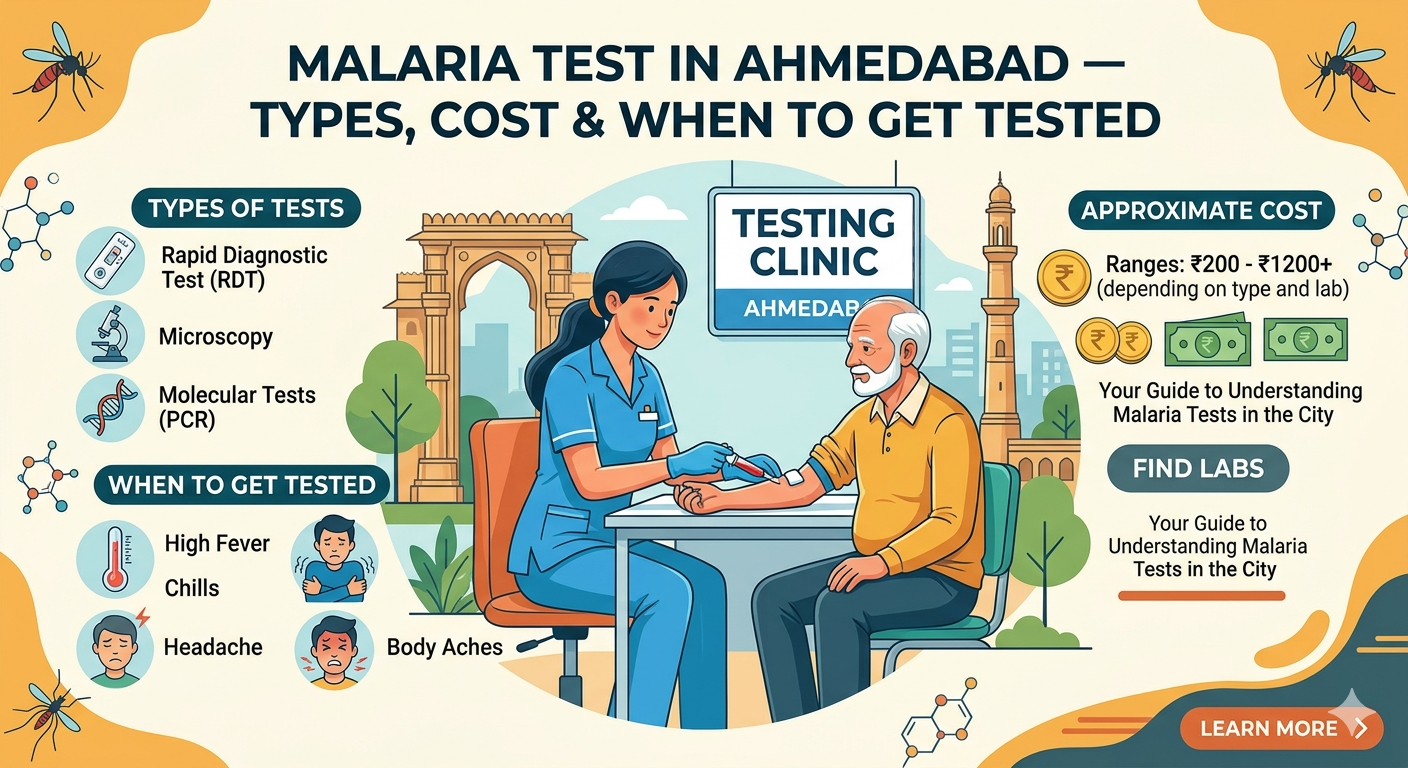
Every monsoon season, Ahmedabad sees a sharp spike in malaria cases. Waterlogging, humidity and stagnant pools create ideal breeding grounds for the Anopheles mosquito — the carrier of malaria parasites. Despite being entirely preventable and treatable, malaria still causes serious complications when diagnosis is delayed. If you or a family member has had a high fever lasting more than two days, visiting a pathology lab in Ahmedabad for a malaria test is one of the most important steps you can take.
Symptoms That Should Prompt Immediate Testing
Malaria symptoms can easily be confused with the flu or a seasonal viral infection. The key difference is the cyclical pattern of fever — chills followed by a sudden spike in temperature, then sweating and temporary relief. Do not wait it out. Get tested immediately if you notice:
High fever (39–40°C) that comes and goes in cycles of 48 or 72 hours
Sudden chills, shivering and body ache before the fever peaks
Severe headache, nausea and vomiting
Fatigue and weakness that persists even after the fever breaks
Yellowish tinge to the skin or eyes (jaundice) — a sign of severe malaria
Because these symptoms overlap with dengue and typhoid, doctors in Ahmedabad often advise a combined fever profile test to screen for multiple infections at once — especially during the monsoon months of June to September.
Types of Malaria Tests Available in Ahmedabad
There are two primary tests used to diagnose malaria at any quality blood test lab in Ahmedabad. Your doctor will recommend one or both depending on how long you have had symptoms:
1. RDT — Rapid Diagnostic Test
The RDT detects specific malaria antigens in your blood using a simple dipstick method. Results are ready in under 30 minutes, making it ideal when a quick decision is needed. It is highly effective at detecting Plasmodium falciparum — the most dangerous malaria species — and is the go-to screening test at most walk-in centres and a pathology lab near you.
2. Blood Smear Microscopy
This is the gold standard for malaria diagnosis. A drop of blood is examined under a microscope by a trained pathologist to identify the malaria species and count the number of parasites. It is more detailed than RDT and is essential when treatment decisions depend on knowing the exact species. A well-equipped diagnostic lab with automated analysers ensures the highest accuracy for this test.
How to Prepare for a Malaria Test
One of the biggest advantages of a malaria test is that no special preparation is needed:
No fasting required — you can eat and drink normally before the test
Inform the lab if you have already started any anti-malarial medication
Carry any previous fever-related reports if you have been unwell for more than 3 days
If mobility is a concern, book a free home sample collection — a trained collector visits your home at your preferred time slot
A Complete Blood Count (CBC) is almost always ordered alongside a malaria test. Low platelet count and anaemia are common in malaria patients, and a CBC gives your doctor a complete picture to guide treatment.
Get Your Malaria Test Done at the Best Pathology Lab Near You
Malaria is dangerous only when diagnosis is delayed. At Shanti Pathology Laboratory, every malaria test is processed with precision using advanced diagnostic equipment. Reports are delivered the same day, and our trained pathologists personally verify every result before it reaches you.
With four branches across the city — Naranpura, Paldi, Maninagar, and Gandhinagar — finding a trusted pathology lab near you has never been easier. We also offer free home sample collection across all areas of Ahmedabad, so you or your loved ones can get tested without the stress of travelling while unwell.
Explore our health packages which include fever profile, CBC and malaria tests combined at affordable rates. You can also view our complete list of diagnostic services or book a home visit online today.