
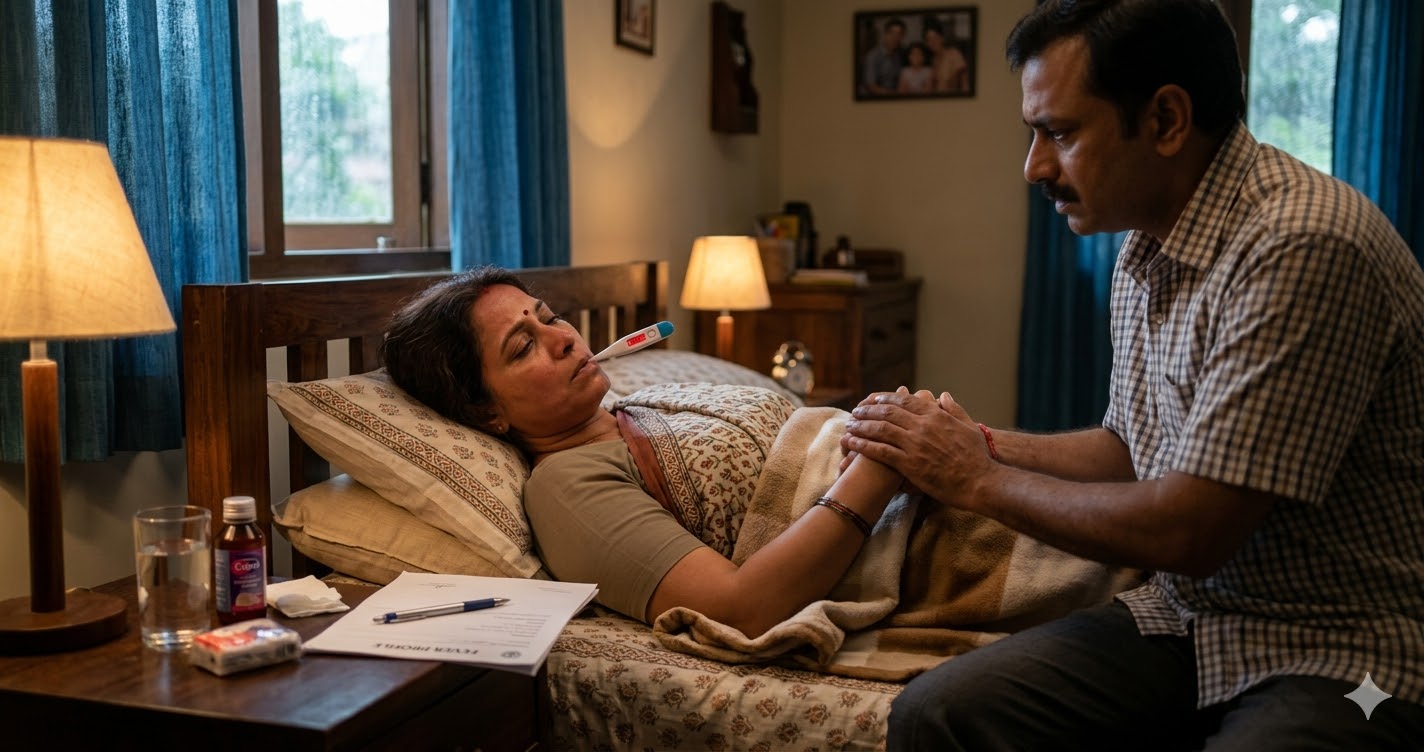
A fever that refuses to go away after two or three days is never something to ignore. While a mild temperature spike for 24 hours is often just your body fighting off a common cold, a persistent fever — especially one accompanied by body aches, chills, rash, or loss of appetite — almost always has a deeper cause that needs to be identified.
That is where the Fever Profile test comes in. It is one of the most commonly ordered diagnostic panels in India, especially during the monsoon and post-monsoon seasons when vector-borne and waterborne diseases are at their peak. In this blog, we explain what the Fever Profile test includes, when you should get it done, and how to understand your results.
What Is a Fever Profile Test?
A Fever Profile is not a single test — it is a panel of multiple blood and urine tests grouped together to identify the most common causes of persistent or high-grade fever. Rather than testing for one disease at a time, the fever profile screens for several conditions simultaneously, saving you time and helping your doctor reach a faster diagnosis.
The exact tests included in a fever profile may vary slightly between labs, but most standard fever profiles cover the following:
Tests Included in a Standard Fever Profile
Complete Blood Count (CBC): The first and most essential test in any fever workup. A high WBC count suggests bacterial infection. Low platelets raise suspicion for dengue. Low WBC can indicate viral infections or typhoid.
Malaria Antigen Test (MP Antigen): Detects Plasmodium falciparum and Plasmodium vivax — the two main malaria parasites — directly from the blood. Rapid and highly accurate.
Dengue NS1 Antigen & IgM/IgG Antibodies: NS1 antigen detects dengue in the early phase (day 1 to 5 of fever). IgM antibodies appear after day 5 and confirm a recent infection. IgG indicates past exposure or secondary infection.
Widal Test: Checks for antibodies against Salmonella typhi — the bacteria that causes typhoid fever. Most reliable when done after 7 days of fever onset.
Urine Routine & Microscopy: Rules out urinary tract infection (UTI) as a cause of fever — especially important in women, children, and elderly patients.
Erythrocyte Sedimentation Rate (ESR): A non-specific marker of inflammation. A significantly elevated ESR alongside fever can point to chronic infections, autoimmune conditions, or tuberculosis.
C-Reactive Protein (CRP): A more sensitive and faster-responding marker of inflammation and bacterial infection than ESR. High CRP confirms active inflammation in the body.
Some extended fever profiles may also include Leptospira antibodies, Scrub Typhus IgM, Chikungunya antibodies, or a Liver Function Test — depending on the clinical presentation and the region.
When Should You Get a Fever Profile Test Done?
You should consider getting a Fever Profile done if you experience any of the following:
Fever above 38.5°C (101.3°F) lasting more than 2 to 3 days without a clear cause
High-grade fever with severe body aches, joint pain, or headache
Fever with a skin rash — especially a red, spotted rash
Fever with chills, sweating episodes, and cyclical temperature spikes (classic malaria pattern)
Fever with nausea, vomiting, abdominal pain, or loss of appetite
Fever with unusual fatigue and weakness that seems disproportionate to the temperature
Fever in a child that does not respond to paracetamol within 48 hours
Any fever during monsoon season in Ahmedabad — when dengue, malaria, and leptospirosis risk is significantly higher
Understanding Your Fever Profile Report
Reading a fever profile report can feel confusing, especially because it contains results from multiple tests. Here is a simple guide to interpreting common findings:
Low platelets (below 1.5 lakh) + Positive Dengue NS1: Strong confirmation of dengue fever. Platelet monitoring every 24 to 48 hours is essential.
Positive MP Antigen: Confirms malaria. The species identified (falciparum vs vivax) determines the treatment protocol.
High Widal titre (above 1:160): Suggestive of typhoid — but always interpret in clinical context, as a past infection or vaccination can also raise Widal levels.
High WBC + High CRP + High ESR: Suggests a significant bacterial infection. Your doctor may consider further testing or start empirical antibiotic treatment.
Normal CBC + Negative all antigens: May indicate a viral fever that does not show up on standard panels, or an early-stage infection where antibodies have not yet developed. A repeat test after 48 to 72 hours may be advised.
Important: Never self-medicate based on fever profile results alone. Always share your report with a qualified doctor for proper interpretation and treatment.
Does the Fever Profile Require Fasting?
Generally, no. Most tests in the fever profile — including the CBC, malaria antigen, dengue tests, and Widal — do not require fasting. However, if your doctor has also asked for a fasting blood sugar or lipid profile along with the fever panel, you may need to fast for those specific tests.
When in doubt, always confirm with the lab at the time of booking.
How Long Does It Take to Get Fever Profile Results?
Most routine fever profile results are available within 6 to 12 hours of sample collection. Rapid antigen tests for dengue and malaria can deliver results in as little as 2 to 4 hours. More specialised tests like Leptospira or Scrub Typhus antibodies may take 24 to 48 hours.
At Shanti Pathology Laboratory, we prioritise fast turnaround on fever-related tests because we understand that when someone is unwell, waiting for results adds to the stress. We also deliver reports digitally via WhatsApp and email — so you do not have to visit the lab a second time just to collect your report.
Get Your Fever Profile Done at a Pathology Lab Near You
When fever strikes, fast and accurate diagnosis is everything. If you are searching for a pathology lab near you in Ahmedabad or Gandhinagar, Shanti Pathology Laboratory offers comprehensive fever profile testing at all four of our branches — with the added convenience of free home sample collection for patients who are too unwell to travel.
Visit us at any of our branches:
Naranpura Branch — 132 Feet Ring Rd, near AEC Cross Road, Ahmedabad 380013
Paldi Branch — Sukhshanti Complex, Paldi, Ahmedabad 380007
Maninagar Branch — Rajratan Complex, Maninagar, Ahmedabad 380008
Gandhinagar Branch — Surbhi Complex, Sector 6, Gandhinagar 382006