
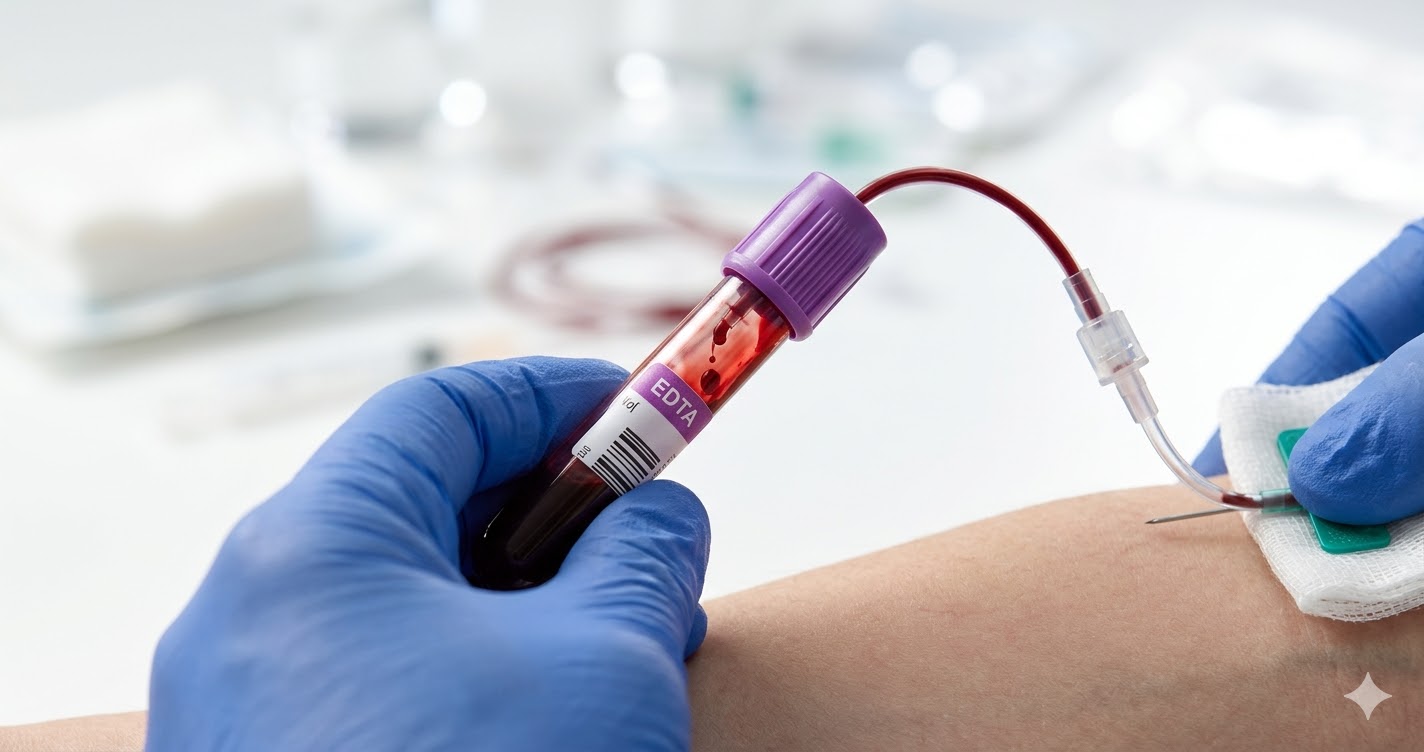
Every time you visit a doctor with a complaint — whether it is fatigue, fever, unexplained weight loss, or recurring infections — the first thing they almost always say is: "Let's get a blood test done." And nine times out of ten, that blood test begins with a CBC.
The Complete Blood Count is one of the most commonly ordered diagnostic tests in medicine — and for good reason. A single CBC can reveal a remarkable amount of information about your health, from the presence of infection and anaemia to clotting disorders and even early signs of serious conditions like leukaemia.
In this blog, we break down every component of the CBC test in simple language — so you know exactly what your report is telling you.
What Is a CBC Test?
A Complete Blood Count (CBC) is a blood test that measures the different types and quantities of cells in your blood. Blood is made up of three main types of cells — red blood cells, white blood cells, and platelets — each of which serves a critical function in keeping your body healthy.
The CBC test measures all three, along with several sub-components, giving your doctor a comprehensive snapshot of your blood health in a single test.
Components of a CBC Report — Explained Simply
1. Haemoglobin (Hb)
Haemoglobin is the protein in red blood cells that carries oxygen from your lungs to the rest of your body. Low haemoglobin means your tissues are not getting enough oxygen — this is called anaemia.
Normal range (men): 13.5 to 17.5 g/dL
Normal range (women): 12.0 to 15.5 g/dL
Low Hb: Indicates anaemia — common causes include iron deficiency, vitamin B12 deficiency, blood loss, or chronic disease
High Hb: Can indicate dehydration, lung disease, or polycythaemia
2. Red Blood Cell Count (RBC)
RBC count measures the total number of red blood cells per microlitre of blood. This helps confirm anaemia and also helps classify what type of anaemia a patient has.
Normal range (men): 4.5 to 5.9 million cells/mcL
Normal range (women): 4.1 to 5.1 million cells/mcL
3. White Blood Cell Count (WBC / TLC)
White blood cells are your body's primary defence against infection and disease. The Total Leucocyte Count (TLC) measures the total number of white blood cells. An abnormal WBC count is one of the most important findings in a CBC report.
Normal range: 4,000 to 11,000 cells/mcL
High WBC: Suggests active infection, inflammation, stress, or in serious cases, leukaemia
Low WBC: May indicate a viral infection, bone marrow disorder, or the effect of certain medications
4. Differential Leucocyte Count (DLC)
The DLC breaks down the WBC count into five specific types of white blood cells — each of which fights different kinds of threats:
Neutrophils: The first responders to bacterial infection. High neutrophils usually indicate a bacterial infection.
Lymphocytes: Key players in viral immunity. High lymphocytes are common in viral infections like dengue or COVID-19.
Eosinophils: Elevated in allergic reactions and parasitic infections.
Monocytes: Rise during chronic infections and inflammatory conditions.
Basophils: Involved in allergic responses. Rarely elevated but significant when they are.
5. Platelet Count (PLT)
Platelets are tiny cell fragments that help your blood clot when you bleed. A platelet count that is too low or too high can both cause serious problems.
Normal range: 1.5 to 4.0 lakh cells/mcL (150,000 to 400,000)
Low platelets (Thrombocytopenia): Seen in dengue fever, ITP, liver disease, or bone marrow disorders. Can cause excessive bleeding.
High platelets (Thrombocytosis): Can increase the risk of blood clots. Associated with infection, inflammation, or iron deficiency.
6. Haematocrit (PCV — Packed Cell Volume)
Haematocrit measures what percentage of your blood volume is made up of red blood cells. It is closely related to haemoglobin and confirms anaemia or dehydration when out of range.
Normal range (men): 41% to 53%
Normal range (women): 36% to 46%
7. MCV, MCH, MCHC — Red Cell Indices
These three parameters describe the size and haemoglobin content of individual red blood cells, and are essential for classifying the type of anaemia:
MCV (Mean Corpuscular Volume): Measures the average size of red blood cells. Low MCV suggests iron deficiency anaemia. High MCV suggests B12 or folate deficiency.
MCH (Mean Corpuscular Haemoglobin): Measures the average amount of haemoglobin per red blood cell.
MCHC (Mean Corpuscular Haemoglobin Concentration): Measures the concentration of haemoglobin in red blood cells.
When Should You Get a CBC Test?
A CBC is recommended in many situations, including:
Unexplained fatigue, weakness, or dizziness
Persistent fever or signs of infection
Unusual bruising or bleeding
As part of a routine annual health checkup
Before and after surgery
Monitoring of chronic conditions like anaemia, leukaemia, or HIV
During pregnancy — to monitor for gestational anaemia
Do You Need to Fast Before a CBC Test?
No — the CBC test does not require fasting. You can eat and drink normally before giving your blood sample. However, if you are getting a CBC done along with other tests like fasting blood sugar or lipid profile, you may need to fast for those tests. Confirm with the lab when booking.
Book Your CBC Test at a Blood Test Lab Near You
The CBC is an affordable, quick, and highly informative test that every adult should include in their annual health routine. If you are looking for a blood test lab near you in Ahmedabad or Gandhinagar, Shanti Pathology Laboratory offers CBC testing at all four of our branches with fast report delivery and the option of free home sample collection.
Walk in or book from home:
Naranpura Branch — 132 Feet Ring Rd, near AEC Cross Road, Ahmedabad 380013
Paldi Branch — Sukhshanti Complex, Paldi, Ahmedabad 380007
Maninagar Branch — Rajratan Complex, Maninagar, Ahmedabad 380008
Gandhinagar Branch — Surbhi Complex, Sector 6, Gandhinagar 382006