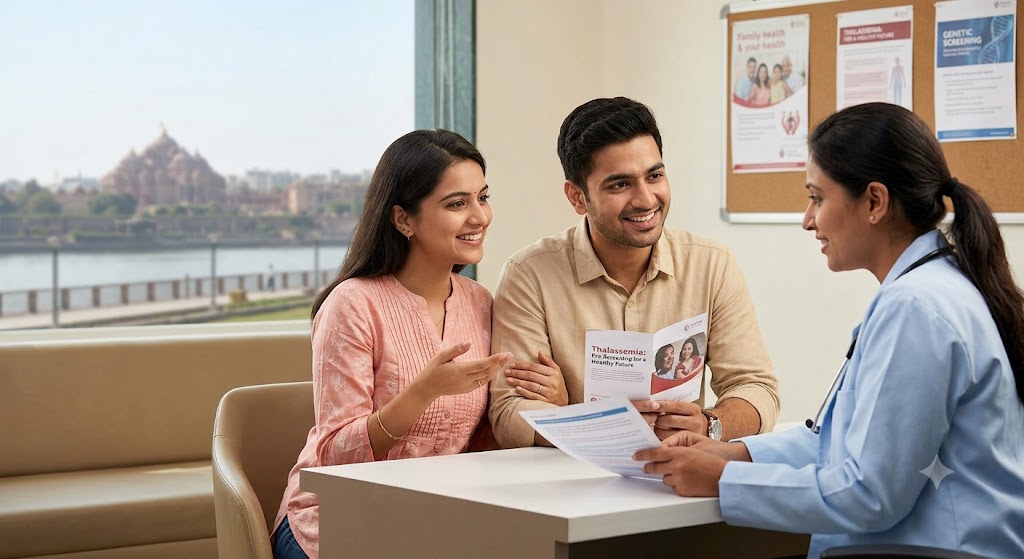
Most people have never heard of Thalassemia until it affects their family directly - and that's exactly the problem. It's a genetic blood disorder that can be silently passed from parents to children, and in Gujarat, the carrier rate is notably higher than the national average. A simple blood test before marriage or pregnancy can prevent a lifetime of complications for your future child.
What Is Thalassemia?
Thalassemia is an inherited blood disorder that affects the body's ability to produce healthy hemoglobin - the protein in red blood cells that carries oxygen. It comes in two main forms:
- Thalassemia Minor (Trait/Carrier): The person carries the gene but usually shows no major symptoms. Most carriers live a completely normal life and are unaware they carry the trait.
- Thalassemia Major: A severe form that appears in early childhood, requiring lifelong blood transfusions and medical management.
The danger isn't in being a single carrier - it's when two carriers have children together, which significantly raises the risk of Thalassemia Major in the child.
Why Gujarat Has Higher Thalassemia Carrier Rates
Gujarat is among the Indian states with a higher reported prevalence of Thalassemia trait, partly due to genetic patterns within certain communities and a tradition of marriages within the same community or extended family circles. This is why several government health programs across Gujarat actively promote school and pre-marital Thalassemia screening - awareness is the single biggest tool for prevention.
Symptoms of Thalassemia
Thalassemia Minor often has no visible symptoms at all, though some carriers may notice:
- Mild, unexplained fatigue
- Slightly pale skin
Thalassemia Major symptoms usually appear within the first 1-2 years of a child's life:
- Severe anemia and constant tiredness
- Pale or yellowish skin
- Poor growth and delayed development
- Enlarged spleen or abdomen
- Frequent infections
Why Thalassemia Is Often Mistaken for Iron Deficiency Anemia
This is one of the most important things to know: Thalassemia trait and iron deficiency anemia look almost identical on a basic blood report - both show low hemoglobin and small red blood cells. Many people are wrongly given iron supplements for months without improvement, simply because Thalassemia was never ruled out.
This is exactly why doctors recommend confirming with a Complete Blood Count (CBC) along with a specific Thalassemia test - rather than assuming it's "just low iron."
Who Should Get Tested?
You should strongly consider Thalassemia screening if you are:
- ✓Planning marriage - ideally before finalizing, as part of pre-marital blood tests
- ✓Planning a pregnancy or already pregnant - as part of pregnancy blood tests
- ✓A parent of a child with unexplained anemia or poor growth - see blood tests for children
- ✓Someone with a family history of Thalassemia or anemia that doesn't respond to iron supplements
Thalassemia Test: What It Involves
The screening process is simple and only requires a small blood sample:
- CBC with Peripheral Smear - gives the first indication of unusually small or pale red blood cells.
- Hemoglobin Electrophoresis / HPLC - the confirmatory test that identifies the exact type and percentage of abnormal hemoglobin.
No special preparation is needed, and reports are usually ready within a few days.
What If Both Partners Are Carriers (Thalassemia Minor)?
If both partners are found to be Thalassemia Minor carriers, here is the genetic probability for each pregnancy:
| Outcome | Probability |
|---|---|
| Child is completely normal | 25% |
| Child is a carrier (Thalassemia Minor) | 50% |
| Child has Thalassemia Major | 25% |
This does not mean a couple cannot marry or have children - it simply means genetic counseling and informed family planning, guided by a doctor, becomes important.
Living with Thalassemia Major - Why Early Detection Matters
When Thalassemia Major is detected early in a child's life, doctors can begin a proper treatment plan immediately - including regular blood transfusions and iron chelation therapy to prevent organ damage. Children diagnosed and managed early go on to lead far more stable, active lives compared to those diagnosed late.
Get Screened at Shanti Pathology Laboratory
At Shanti Pathology Laboratory, Thalassemia screening is simple, accurate, and stress-free:
- Free home sample collection across Naranpura, Paldi, Maninagar, and Gandhinagar
- Accurate Hemoglobin Electrophoresis / HPLC reports delivered via email or WhatsApp
- Can be combined with our health packages for couples planning marriage or pregnancy
- Friendly guidance on what your report means and the next steps to take
Frequently Asked Questions
Is Thalassemia curable?
Thalassemia Minor needs no treatment - it's simply a trait. Thalassemia Major currently has no permanent cure outside of bone marrow transplant in select cases, but it is very manageable with regular treatment.
Can two Thalassemia Minor carriers marry?
Yes, they can. It's a personal decision - but genetic counseling beforehand helps the couple make a fully informed choice about family planning.
Is the Thalassemia test painful?
No, it's a standard blood draw - the same as any routine blood test, with no special pain or preparation involved.
Should this be done even if no one in the family has Thalassemia?
Yes. Most carriers have no family history they are aware of, since the trait can stay silent for generations. Screening is the only way to know for sure.